The 5 Best Stadiums in Italy
Italian football is not only about tactics, history and great players. It is also about place.The stadiums matter. They shape the noise, the rituals, the identity of the clubs and the memories of the supporters. Some Italian grounds are modern and efficient, built for the commercial reality of today's game. Others are older, heavier, less comfortable, but full of character in a way new arenas often struggle to recreate.
From Turin to Naples, these are five of the best stadiums in Italy.
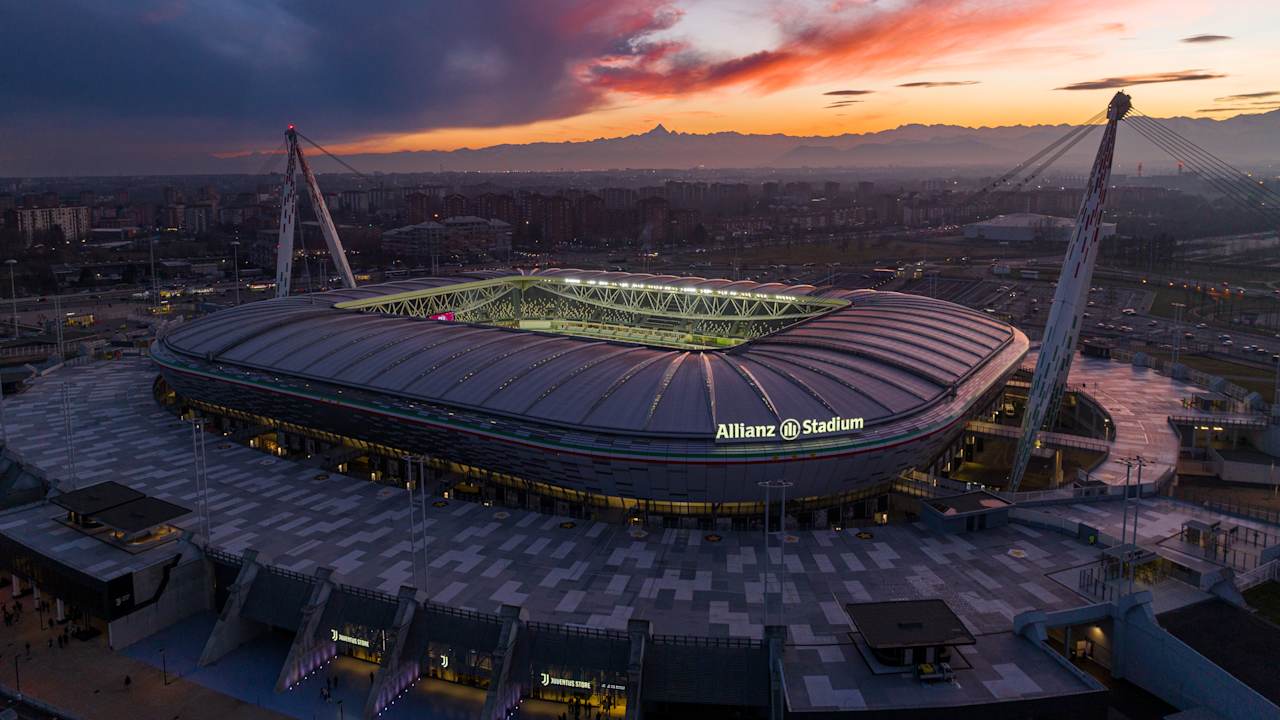
Allianz Stadium, Turin - Juventus' modern model
City: TurinHome team: Juventus
Opened: 2011
Capacity: around 41,500
Allianz Stadium is not the biggest stadium in Italy, but it may be the most important modern one.
Opened in 2011 on the site connected to the old Stadio delle Alpi era, Juventus' home changed the standard for club-owned stadiums in Italian football. While many Serie A clubs still play in municipal venues, Juventus built a ground designed specifically around football, matchday income and supporter proximity.
That is what makes it so effective. The stands are close to the pitch, the view is sharp, and the stadium feels compact in the best possible sense. It does not rely on huge capacity to create intensity. It relies on design.
For Juventus, Allianz Stadium also became a symbol of dominance. It opened just as the club entered one of the strongest periods in its domestic history, and the stadium quickly became associated with control, consistency and winning.
Among Italian grounds, it is the clearest example of the future: smaller than the old giants, but sharper, more intimate and more commercially powerful.
San Siro, Milan - the Italian football monument
City: MilanHome teams: AC Milan and Inter Milan
Opened: 1926
Capacity: around 75,800 to 80,000
Official name: Stadio Giuseppe Meazza
San Siro is probably the most famous stadium in Italy.
It is also one of the most recognisable stadiums in world football. The huge towers, spiralling ramps and steep stands give it a presence few grounds can match. Opened in 1926, it has been home to AC Milan for most of its history and to Inter since 1947, making it the shared stage for two of Europe's great clubs.
The Derby della Madonnina gives San Siro much of its mythology. When Milan and Inter meet there, the stadium becomes more than a venue. It becomes a theatre of banners, colour, pressure and memory.
Its history goes far beyond domestic football too. San Siro has hosted World Cup matches, European Championship matches and multiple European Cup and Champions League finals. Few stadiums have seen so many elite players, decisive nights and historic moments.
Its future remains uncertain, with Milan and Inter moving closer to plans for a new modern stadium project. That makes San Siro feel even more precious. Whether it survives in full, in part, or eventually gives way to something new, it will remain one of football's great monuments.
Stadio Olimpico, Rome - the capital's grand stage
City: RomeHome teams: AS Roma and Lazio
Opened: 1953
Capacity: around 70,000 to 72,700
Stadio Olimpico is the great shared arena of Rome.
Home to both Roma and Lazio, it is one of the largest and most significant stadiums in Italy. It has hosted Olympic events, major international tournaments, Coppa Italia finals, European finals and countless Rome derbies.
The Olimpico is different from Allianz Stadium. It is not compact, and the athletics track means the stands are set further away from the pitch. On an ordinary day, that can make it feel less intimate than a pure football ground.
But on the right night, scale becomes its strength.
A Derby della Capitale at the Olimpico can be one of the most emotional experiences in European football. Roma's Curva Sud and Lazio's Curva Nord give the stadium two identities inside the same building, and the result is a rivalry that feels tied not just to clubs, but to the city itself.
The Olimpico is not perfect. Few old multipurpose stadiums are. But as a national stage, a derby arena and a symbol of Rome's football culture, it fully belongs on this list.
Stadio Diego Armando Maradona, Naples - pure emotion
City: NaplesHome team: SSC Napoli
Opened: 1959
Capacity: around 54,700
Former name: Stadio San Paolo
Some stadiums are defined by architecture. Napoli's home is defined by emotion.
Opened in 1959 as Stadio San Paolo, the stadium was renamed in 2020 after Diego Armando Maradona, the player who changed Napoli forever. No other Italian ground is so closely connected to one footballer, one era and one city's sense of pride.
The stadium itself has been renovated several times, including work around the 1990 World Cup and later upgrades to seating, lighting and facilities. It is not the most modern venue in Serie A, and discussions about Napoli's long-term stadium future continue.
But judging the Maradona only by infrastructure misses the point.
When Napoli are strong, this is one of the loudest and most passionate grounds in Europe. The relationship between the club and the city is unusually intense, and the stadium carries that energy. It feels less like a neutral sporting facility and more like a civic gathering point.
That is why it belongs among Italy's best. Not because it is perfect, but because it is unforgettable.
Stadio Artemio Franchi, Florence - history, architecture and identity
City: FlorenceHome team: Fiorentina
Opened: 1931
Capacity: historically around 47,000, currently affected by renovation work
Architect: Pier Luigi Nervi
Stadio Artemio Franchi is one of Italy's most distinctive football grounds.
Opened in 1931 and designed by Pier Luigi Nervi, it has a different kind of beauty from San Siro or the Olimpico. Its value is not only in size or noise, but in architecture. The famous Marathon Tower, the concrete structure and the old design make it feel deeply connected to Florence: historic, elegant and slightly old-fashioned in a way that fits the city.
For Fiorentina, the Franchi is part of the club's identity. It is not simply where the team plays. It is part of the experience of watching football in Florence.
The stadium is also in the middle of an important redevelopment period. Renovation plans have brought delays, funding questions and changing capacity projections, with final figures expected to sit below the old historical capacity.
Even so, the Franchi remains one of the most authentic Serie A experiences. It may not offer the polish of a new stadium, but it offers something just as valuable: character.
What Makes These Stadiums Special?
The best Italian stadiums are not all great for the same reason.Allianz Stadium is the modern model: efficient, intimate and built for football.
San Siro is the legend: huge, iconic and loaded with history.
Stadio Olimpico is the capital's stage: imperfect, but spectacular when Rome's football culture takes over.
The Maradona is emotion: a stadium inseparable from Napoli, Naples and Diego himself.
The Franchi is heritage: architecture, identity and one of Serie A's most traditional matchday experiences.
Together, they explain why Italian football remains so fascinating. The country's stadiums are not just places where matches happen. They are symbols of cities, clubs, generations and rivalries.
Some need renovation. Some may soon change forever. But for now, these five grounds still show the soul of Italian football better than almost anywhere else.
And if this kind of Italian football trip makes you think beyond the stadium gates, it is worth pairing the journey with another part of the country's identity: wine. From Piedmont to Tuscany, Campania and beyond, you can explore the regions visually with this interactive map of Italian wines and start imagining a wider tour of Italy.
Follow Goallytics.com for more football stories, data and analysis.